

The Forgotten Land
A Travelogue Through England

First day in London: March 17th, AD 2025
A group of pigeons looks for crumbs as traffic honks by. I walk in front of my parents, eager for some independence. My luggage is rather heavy, but I can manage.
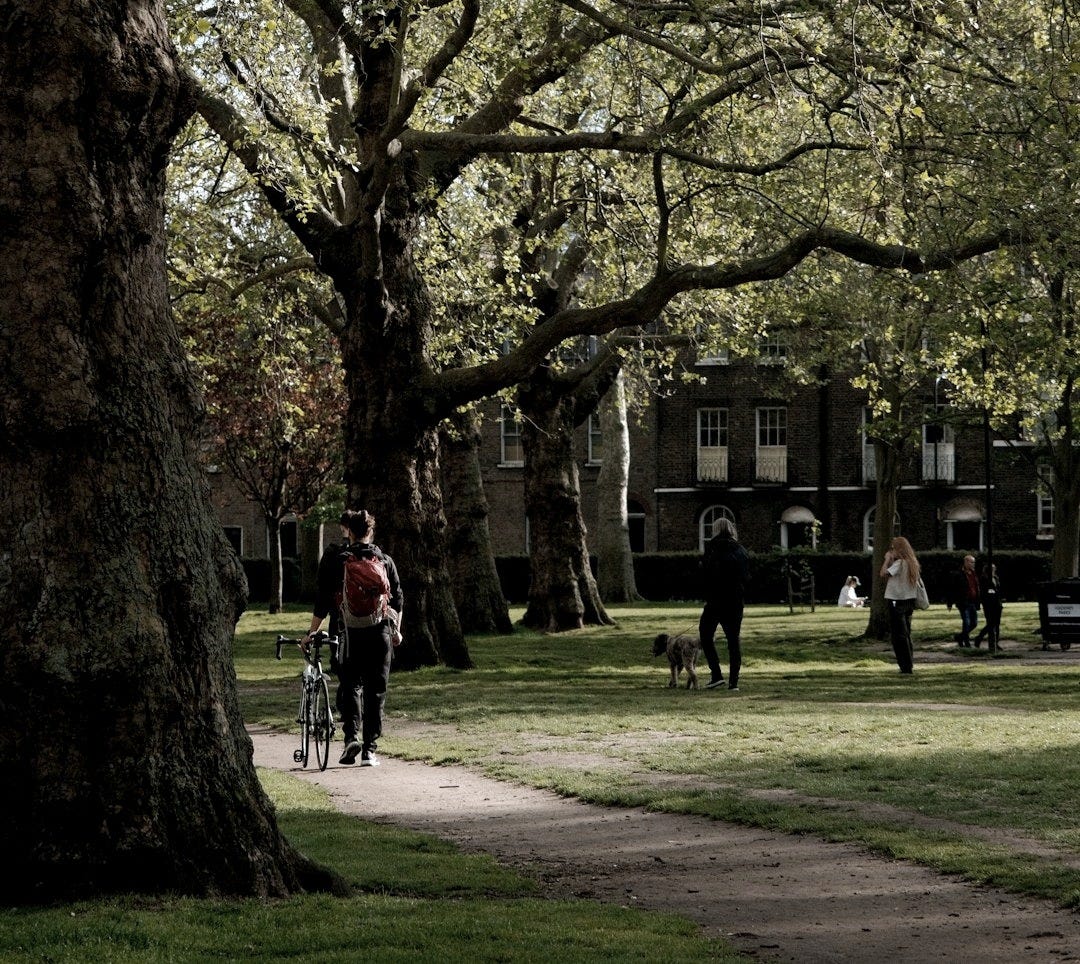
Despite the cold wind and faces of the city, daffodils are already pushing themselves up from the ground. They stand jaunty in the city parks, their yellow heads doing much to brighten the dirty streets. The trees stand somberly next to them, old veterans to the sights of London. Their roots are swollen where they push against the pavement. The holes cut in the concrete are too small for their massive trunks. Below ground their roots hold each other in a comforting embrace, where frost-like filaments of mycorrhizal fungi connect these time-weary residents.
I wonder if they miss the forest. But London is an ancient city. Perhaps they have never seen the forest.
The Westminster Way– March 18th
Running across a busy London street is not what comes to my mind when I think of pilgrimage. But run across I did.
We are walking the Westminster Way this morning. Fortified with a breakfast of haggis (my choice) and eggs, my parents and I visit five Catholic sites tucked away in the heart of London. Most are hidden in plain sight. Step into the alcove of a regular building and you find a chapel of exquisite beauty masked behind a brick veil. The Chapel of Corpus Christi is my favorite of all the spots we visit. The church is dark and wooden, and the ceiling is painted in a dusky mantle of stars. A statue of Saint Anthony holds the child Jesus. I smile and pray for a bit. It is nice to see a face I recognize.
When we reach Tower Hill my father reads a prayer from our pilgrimage guide;
“Hear the prayers of those who abide with you in dangerous times
and in dark valleys, and who die with your name on their lips.
Draw them quickly to your side where they might know eternal peace.”
The Tyburn Tree– March 20th
“Glory be to the Father, to the Son, and to the Holy Spirit,” my dad prompts as he fingers the rope of black beads in his hand.
“As it was in the beginning, is now, and ever shall be. World without end. Amen,” my mother and I say back. A crowd of people pass us and I fight the urge to lower my voice. Do not be ashamed of praying, I tell myself. Do not be ashamed of praying. Do not be ashamed. Do not…
A man looks at us questingly and I lower my voice. My conscience pricks me. I feel relieved when we reach our destination.
We cross ourselves and climb the rather drab steps of Tyburn Convent.
The chapel is painted a dingy white and a cheap altar stands on the other side of an iron divider. Plump nuns pray beneath fluorescent lights.
A golden monstrence stands behind the altar, the delicate host looking like a white eye surrounded by many golden lashes. The convent is nothing like my dark and woody church back home. But still, Jesus is here. “Truly here I have seen him who looks after me” (Gen 16.13).
A priest says a Mass. A sister sings for joy when he places the Eucharist on her tongue.
After Mass, a frail woman in a pink cardigan shows us the crypt. Her accent is thick and Slavic and her brown hair is sprinkled with grey. My mother asks if she is Russian.
“Oh, no!” she says, “I am not Russian. I am Lithuanian. My country was made to be Russia when I was a girl. I was made to speak Russian. I was made to act Russian. We all had to. We could not speak about our Catholic faith. Even as children we knew this.”
We enter a modest chapel. She shows us the bloodied shirts and bone fragments so carefully preserved within the glass cases. Tokens kept by weeping relatives centuries ago.
“These are the Tyburn Martyrs,” the woman tells us in her Lithuanian accent. “They were the first to die.”
“Under King Henry?” I ask.
“Under King Henry. And others.”
I notice an inscription painted on the wall in golden letters. Oh my good Jesus, it reads, what will You do with my heart?
“What’s that?” I ask, pointing to the writing.
“Those are the words of John Houghton, the first Tyburn Martyr. The very first martyr of the English Reformation. They were all subject to triple death. First, they were dragged to the Tyburn tree, then they were hung. Fifteen people could be hung at once.” She points to an altar in the center of the room. “That altar is a replica of the Tyburn tree. When the executioner came to disembowel Houghton, he cried out, ‘Oh my good Jesus, what will You do with my heart?’ and then his heart was ripped out and he died.”
Within my chest, my own heart aches.
“How terrible,” my mother shutters.
“It was all politics,” the woman says simply. “Henry wanted to be head of the Catholic Church in England. Then Elizabeth came and tried to do away with Catholics all together.” The woman looks fondly at the relics on display. “They can kill us,” she says with a smile, “and torture us, but we will not stop loving Christ.”
“The ground must be holy because of them,” says my dad.
“Oh, yes,” she nods, her eyes shining. “The ground is holy. Their blood ran like a river. It is holy. They say all the soil here is saturated with it. And now they pray for England. They pray for us.”
She sighs. Her wrinkled face is peaceful. Even joyful.
London Churches– March 23rd
Today the sky is a typical English grey, like tea with too much cream in it. But there is a tinge of hopeful blue outlining the grey clouds, like spring threatening to burst forth and turn the world green.
Westminster Abbey is beautiful. Glorious even. My father’s friend has joined us in our pilgrimage and tells us about each place we visit.
“This is a beautiful church,” he says. Bruno is a rather quirky man. Brazilian, aristocratic, and broke. But he lived in London for ten years and knows the city. “Westminster Cathedral is still Catholic, but the abbey is Anglican now, has been for a while. They killed many priests, you know.”
“I know,” I say.
A crowd of people wait outside the abbey to be let in. We walk up too and show our rosaries. “Can we come in to pray?”
“Of course!” says the lady selling tickets. She smiles a shiny smile and lets us in for free.
How does one describe Westminster Abbey? You step inside and feel like you’re in a mountain. Everything points upwards. There are statues in the alcoves. Statues on the altar. Stained glass like flowered fountains overflowing. Sunlight cuts through the gloom, casting honeyed light on the stone floor. The architecture is impossibly beautiful.
I sit in the wooden pews and pray a Divine Mercy Chaplet.
The people here are kind. I like the lady who let us in to pray. She’s nice. She loves Christ as I do. But it's like the history of this place has been erased.
A history of murdered priests and broken statues and a king full of wrath and pride.
England is a broken land. A forgotten land.
Tyburn martyrs, I whisper. Pray for us.
Somewhere nearby, a homeless man mutters to himself.
Part Two: Cantibury, Cambridge, and Oxford
Leaving the City– March 24th
The great and monstrous city released us. I look out the car window and my heart leaps each time I see a snatch of greening woodland through the hedges on either side of the road. There is air here. Room to breath. The fields stretch out like patchwork around us. Sheep sleep in the shade of oak trees.
I have learned since leaving the city that English roads have no rhyme or reason. A dirt lane too small and for even one car serves both directions. Already, Bruno has had to jam the car up against the side of a hillock to make room for a truck.
“I am a good driver,” says Bruno from the front seat. “I drive with so much tranquility. But I still get tickets. It’s insane. I drive with so much tranquility.”
My mother and I look at eachother from the backseat of the car.
We are going to die, her eyes say.
Definitely, my eyes say back.
We suppress our nervous giggles until Bruno stops to get gas. As soon as he’s out of earshot, we can’t stop laughing.
Rye and Canterbury – March 25th
My favorite English village lies along the cold British coastline, not too far from Dunkirk. Rye is a jumbled assortment of salt stained windows and warped medieval houses. Moss grows on all the roofs. Flowers grow between the cobblestones. It is one of the few shards of civilization which doesn't feel like it’s imposing on the landscape. The houses are just as much part of the coast as the grey rocks or the screeching gulls. The ocean, the land, and the houses are content with one another’s company.
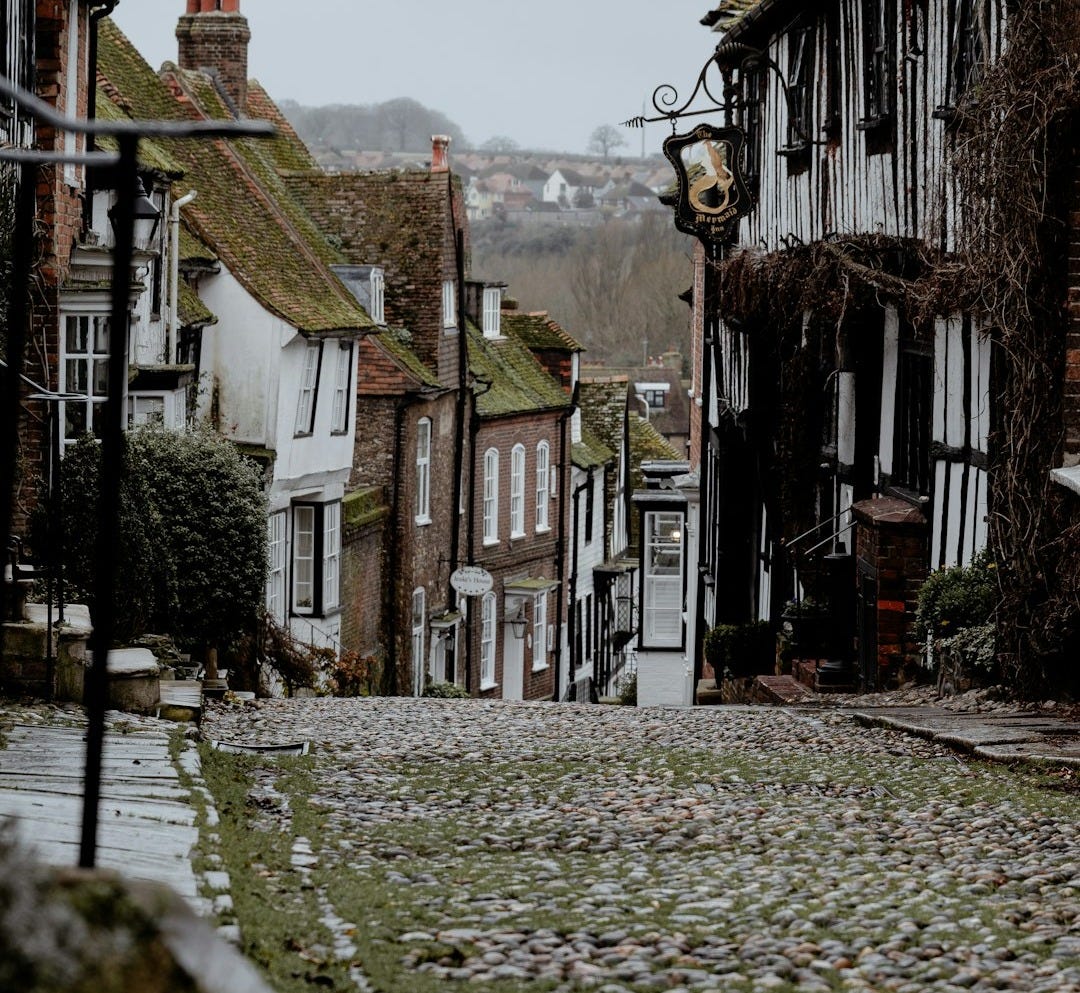
We have tea in Rye and continue on our way– though I would have liked to stay much longer. As we drive to Canterbury I daydream about docking a boat in Rye’s tiny port. I hum a sea shanty which I’m sure drives my family mad.
Canterbury is a walled city. An ancient place turned modern. Pubs and Chinese restaurants stand next to gothic churches and libraries. It has one foot in the past and the other in the neon present. This is the place Chaucer wrote about.
The Monastery– March 26th
I wake up to a grey English sky. It’s drizzling in the dirty streets outside. From where I lay, I can see a pair of seagulls sleeping on a chimney stack. I slide out of bed and open the tiny square window in my bedroom. “Good morning,” I tell the birds sleepily. The air smells of gasoline and cold. I use a chair to climb out of the window. The wet roof tiles feel like river stones beneath my feet. I shiver and let the rain fall on my face. I hear my mother calling me down to breakfast and slip away before anyone sees me.
We drive two hours and arrive at a monastery. We park and walk up through the gardens. The weather has become sunny and placid, though still a bit cold. I stand by a duck pond as everyone else figures out directions– a bit unhelpful but much more fun. A willow tree grows on a tiny island. Canadian geese honk and wood pigeons peck at crumbs. Bruno hands me a granola bar to feed them. I tear off little pieces and soon I’m being swarmed by a flock of hungry birds. One goose in particular gets very close. I wait till he is near enough to touch before I make my move. But his reflexes are faster than mine. He dodges as I lunge at him.
Oh well.
I give him the rest of my granola bar as a way of apology. He eyes me suspiciously as he gobbles up his lunch.
It is unbelievably beautiful here. Everything feels like a well manicured garden. I jot down notes as I walk the grounds, hoping to not forget.
Birds, black swans, Latin names / Weeping willow by the water / Buds pregnant with spring / ‘Spring will come tomorrow’ Bruno says / Old warped windows with lace curtains / Lanterns in the doorways / The trees seem to lean in and pray with us / A bumblebee scratching beneath a leaf.
In the chapel, the skull of Saint Simon Stock rests in a glass case. I press my forehead to the wrought-iron bars surrounding the glass and whisper a prayer.
Like all Catholics, I believe the relics of Saints contain a special power.
“And God was doing extraordinary miracles by the hands of Paul, so that even handkerchiefs or aprons that had touched his skin were carried away to the sick, and their diseases left them and the evil spirits came out of them” (Acts 19:12).
I’m glad to be here. This is a good place.
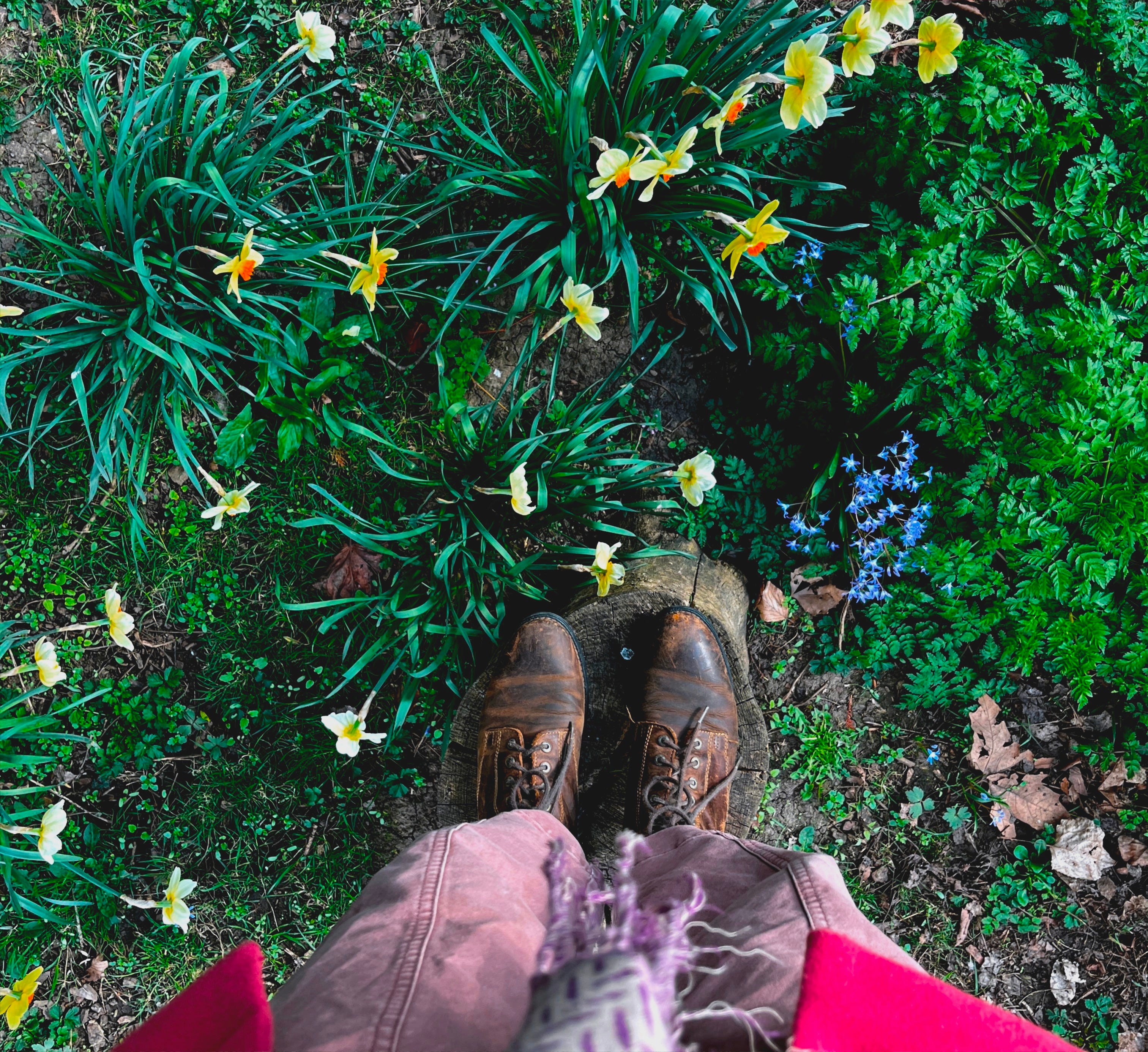
I walk outside and realize the air is warming up. Daffodils shake and give glory to God
The Marian Apparition of Walsingham– March 27th
I’m on the roof again. It's night, and my feet are bare. Today was sunny but cold.
Now it’s drizzling.
English weather is rather neurotic. Either it's lovely– or its very damp.
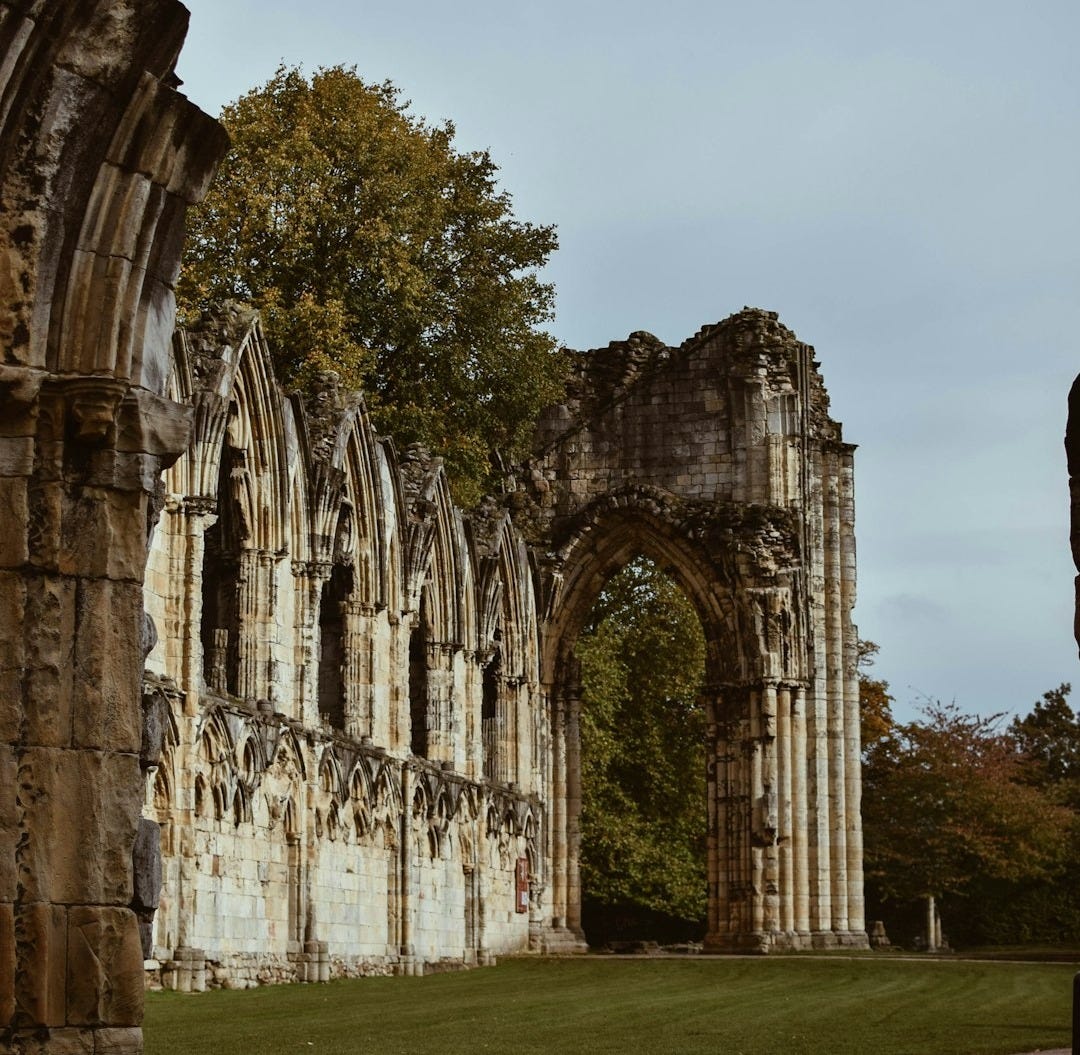
My family went to Walsingham today. Both Walsingham’s actually. There are two in England. One is a shrine dedicated to Our Lady of Walsingham, the only officially approved Marian apparition in England. The second Walsingham is a town with a monastery of the same name. The monastery was destroyed by the English government during the Dissolution of the Monasteries from 1535 to 1541. All that remains is a few broken outbuildings and a massive stone arch.
The grounds were hauntinly beautiful. Summer Snowflakes and ivy lined the many paths twisting through tree copses and preserved rubble. A nun and priest knelt at the sunken foundation of a lost building and prayed a rosary.
For hundreds of years, both Walsinghams were places of pilgrimage and homecoming.
During the reformation they were destroyed.
The stained glass shattered. Towers toppled. Priests told to convert or be killed. Pilgrimage itself was outlawed in England. It was only during the Catholic Emancipation in 1829 that all restrictions were removed. Before that, Catholics couldn't even vote.
But it’s not like that anymore. Nobody is really mad at anyone now. The fire of the Reformation has lulled itself into a dull ache.
I’ve only been Catholic for about a year. I was Protestant before that. I never knew the Reformation was such a bloodbath. I really just didn’t know.
And England seems to have forgotten her history completely.
I call my older brother from California and we chat for a bit. After we hang up, I stay on the roof a while longer. I sing an Ave Maria, half hoping someone hears me in the streets below.
Part Three: The Cotswolds
The Cotswolds– March 28th
“Idiot!” says Bruno as he blows his horn and swerves the rental car dramatically. The woman in the other car shoots us a dirty look.
“Maybe they are Americans, in a rental car,” says my mom charitably.
“Ah, no,” says Bruno. “The English. That lady. English. I want to open the window and throw at her a tomato.” He laughs, a big, Brazilian laugh. “Once there was a nobleman who lived in a house on top of an arch,” he says. “He would throw cannonballs on the heads of the Jews. Cannonballs falling from the arch. So the Pope calls to him and says, ‘I know you are angry, but cannonballs? Can’t you do tomatos or something?’ So the man does watermelons and still kills them. Ha! Watermelons. He does watermelons.”
My mom and I look at eachother, a little disturbed at Bruno’s strange sense of humor. Traveling with him has been a surreal experience.
There is a coat on my lap and three backpacks squished up against me. It seems our luggage is multiplying. In my case, it really is. I keep buying books, despite the lack of space.
I turn my attention back to my book. The Adventures of a Young Naturalist, written by none other than Sir. David Attenborough. Soon I’m lost at sea and surrounded by untrustworthy sailors as I navigate the Pacific, trying to find the legendary Komodo Dragon.
I’m snapped out of my reading daze by my Dad. “Look up, Lilah,” he says. “We’re in the Cotswolds now.”
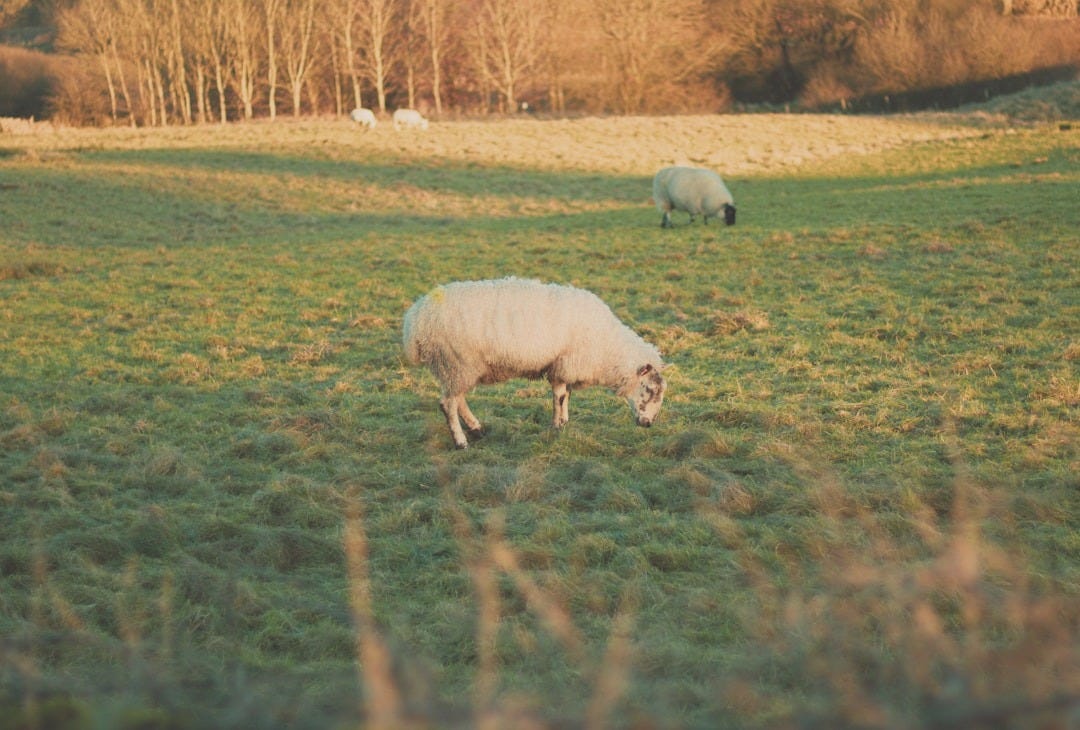
Tiny English villages pass us by. Sheep the color of champagne graze on hillocks by thatched roofs. I catch the names of a few towns, but they mostly bleed together. Woodstock is very posh.
Bruno points out a gothic church as the car rambles by. “See the spire?” he asks me.
“Yeah, it’s really beautiful.”
“Not many of those left.”
“You mean the churches? I’ve seen a ton already today.”
“No, I mean the spires. During the reformation they chop the spires. They chop the spires and break the glass. Some old houses in England still have Priest Holes where they hid the priests. The Church had problems, for sure. But the Reformation did not reform. The reformation was a revolution.”
We make it to our AirBnB in Cambridge by nightfall. On our way, I notice many churches without spires.
The Old Cemetery– March 29th
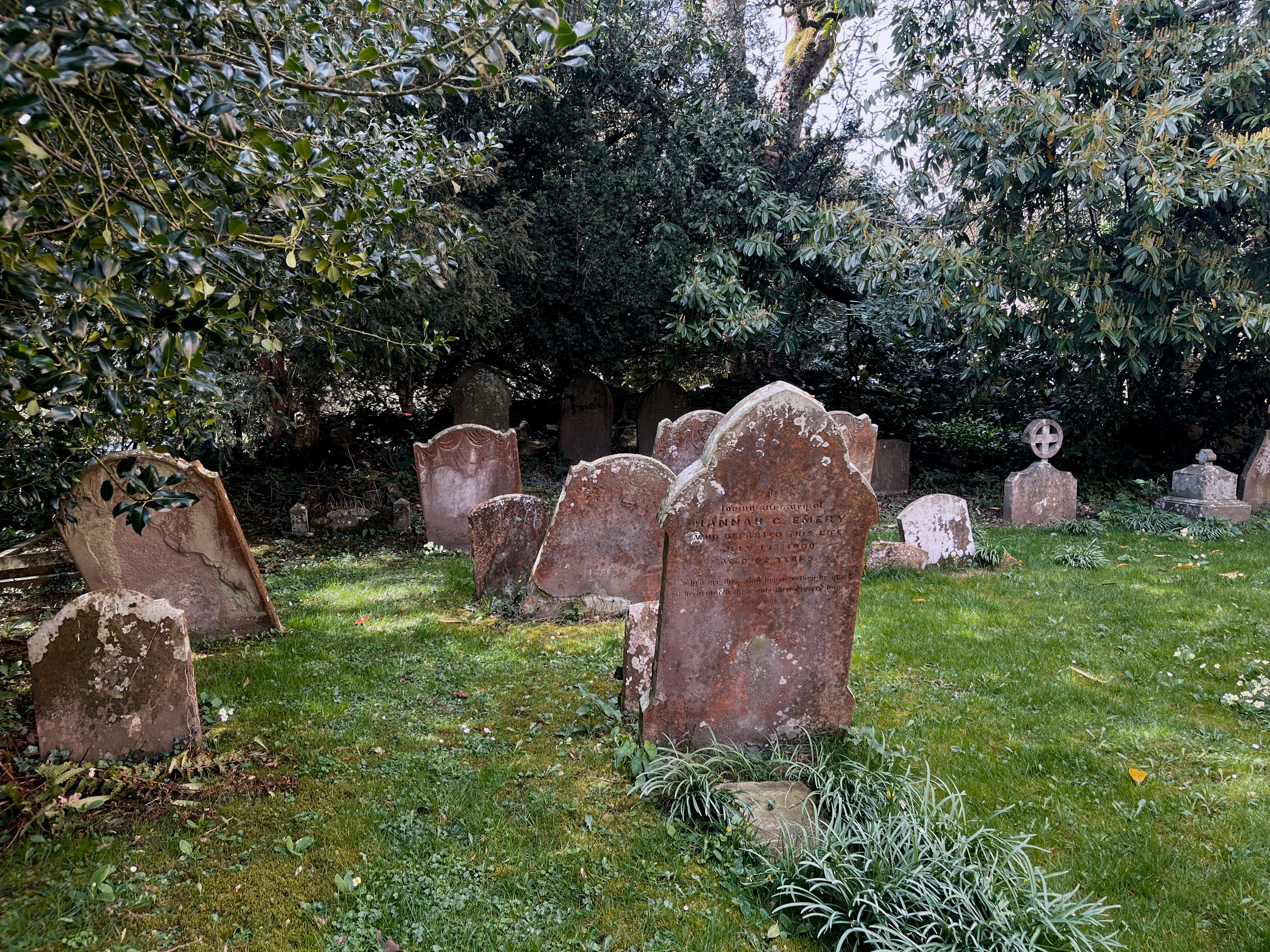
The cemetery is a tangle of graves and flowers. The world is so quiet here. Pure, even. Right in the heart of Cambridge, behind spray painted liquor stores and rows of prestigious schools, lies a jungle of twisted trees. Bones and roots embrace each other beneath the soil. Gravestones and monuments long since rendered faceless by age have sunk into the ground. A blackbird warbels a golden song from an overgrown rosebush. You could get lost in this place, with its many criss-crossing pathways leading deeper and deeper into the grounds.
I can see why people wanted to be buried here. Eternal rest must feel a bit like this. Heaven is supposed to be a garden, after all.
I write a little poem on my phone. It's not much, but I like it.
Moss and quietude
Oak, willow, and stone
Here rests the dead
My dad and I walk back to our flat to join the others for the day’s adventure. We explore the city and see the outsides of her beautiful schools. I pop into the museum of Zoology (obviously) and get lost in their bird collection. The custodian tells me to leave after the building closes. I walk out as the lights turn off.
Rubbish, I say to myself. I could have stayed a while longer.
The Forgotten Crucifix– March 30th
Names and memories have flown past me like a flock of migrating birds. Places I’d only heard about before this trip have become real in my mind. Oxford, Bath, The Lamb and Flag, Richmond Park, the London Zoo. England is no longer just a country from my daydreams.
Bruno rams the car up into a hill to let a station wagon pass. The two English teens in the other car laugh hysterically as they drive by us. The move Bruno has pulled is rather unbelievable. How exactly the car is perched on the side of a near vertical four foot hill defies all rules of natural physics. If traveling with Bruno is surreal, driving with him is a near-death experience.
“They love me!” Bruno says, pointing to the boys.”Ha! Look, they love me. I'm like a crazy Italian uncle. They love me!”
Somehow we survive the rest of the drive. Crows look for food in an unplanted dirt field. Their large nests dot the trees alongside the road and look like squirrel dreys. I try to focus on the scenery and ignore the questionability of our driver. Just don’t look and don’t care, I repeat internally.
“I like Britain,” I say, trying to distract myself by means of conversation.
“Same here,” nods my mom in agreement.
“Ah, no,” says Bruno. “Nobody likes the British. The French and the British everybody hates them. But the difference is the French loves themselves. The British hate themselves. They hate Britain and they hate being British. If you say, ‘I love Britain’ the British will think you are doing them a sarcasm.”
I shrug. “I like Britain.”
We reach our destination by midday. Castle Combe– known modestly as “the prettiest village in all of England” according to the town’s website. A walk through the town proves this to be true. All is perfectly picturesque. Families walk about the village and grab a bite at the local pub. An old sign points to a historic church.
I follow the path leading up to the parish door and enter into the sanctuary. I’m… shocked. The church still appears to be in use, but history banners stand everywhere. Some movie posters are also there, from when the town was used as a production set. Icons are covered up by modern junk, turning the church into nothing but a tourist center. A lady is selling souvenirs in the corner.
It all just seems rather out of touch.
In the very corner of the chapel stands a crucifix. No one pays any attention to the image of Christ Crucified. “Hide not your face from me, O Lord,” cires the psalmist (Psalm 27:9).
Has God really been forgotten in His own house? The symbolism hits me hard.

Later that day, we find ourselves walking around another monastery ground. This one is a ruin too. At some point it was turned into a park. Cute kids play on a playground and a dog runs on the grassy turf. Twin ponds connected by a stream make a home for waterfowl. A swan and seagull swim together. Couples picnic on the green, surrounded by ancient rubble.
I know the monastery will never be rebuilt, but I think the monks are content knowing families laugh beneath the broken belltower. The buildings may have been destroyed, but the joy was not.
At least there’s that.
The Forgotten Land– March 31st
My luggage is packed. Two weeks in England and I am ready to leave its crowded streets and kindly pubs, the glazed church-eyes and lonely vaulted ceilings.
As my family, Bruno, and I walk our bags to the car, pigeons land on the mossy roof shingles to watch us. We will drive back to London today, retracing our steps back to the Heathrow airport.
England is an old country, much older than the United States. Our ancient artifacts seem only antique in compasison to what you find there. Really, It feels like England is two countries, one stacked on top the other.
One is the old England, the England of before. The real England. Now there is the England of after.
England is an old land. A forgetful land. Honestly, I feel weary from traveling in it. But I know I’ll come back here someday. A forgotten land can be made to remember.
“You ready?” my dad asks as he loads my suitcase into the trunk.
I nod. “Yeah,” I say. “I think so.”
I take another glance around before I clamber into the overstuffed car. I think of the saints who brought the Anglo-Saxons to Christianity. The missionaries and martyrs. The monasteries. The priest holes and the chopped spires. I sigh and stare out the window.
“England, England, England,” the trees seem to whisper. “Forget not those who died.”
I've loved every word of it so far ... no time now to give it the full attention it deserves, so will finish tomorrow. Am very glad to have discovered your writing.
I think a typo: "Cantibury is a walled city"